Design for Inclusion
Our early projects started with a deep focus on reducing barriers for people with physical disabilities.
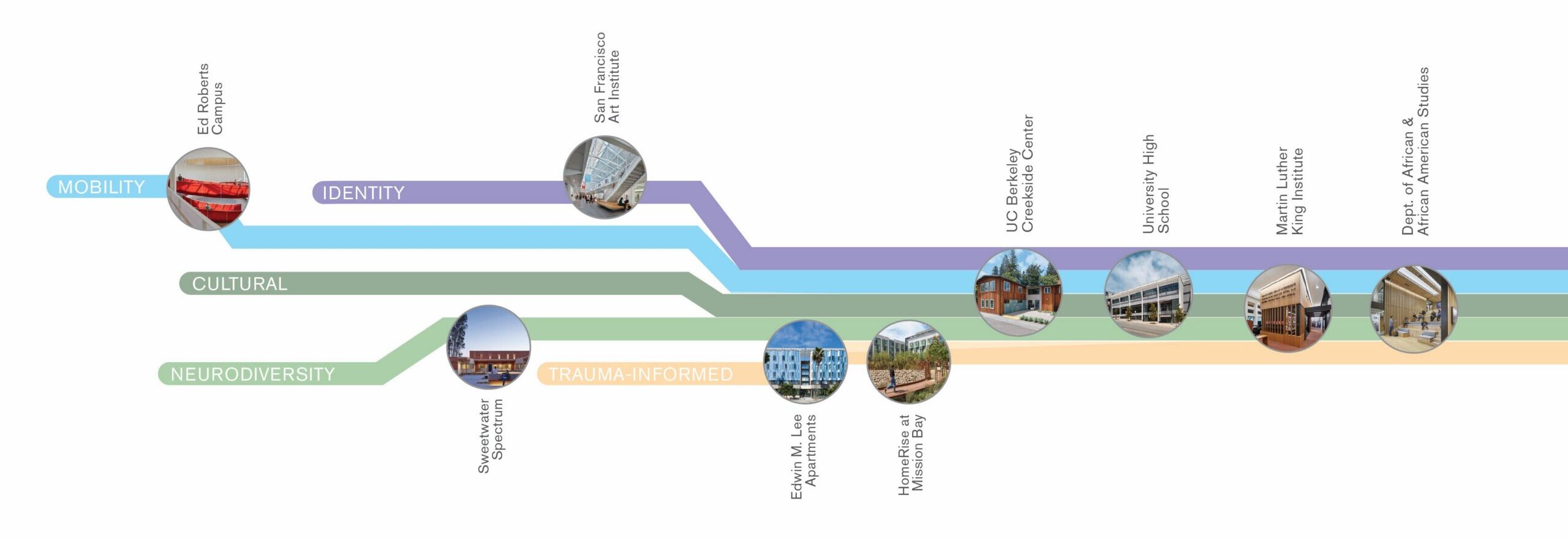
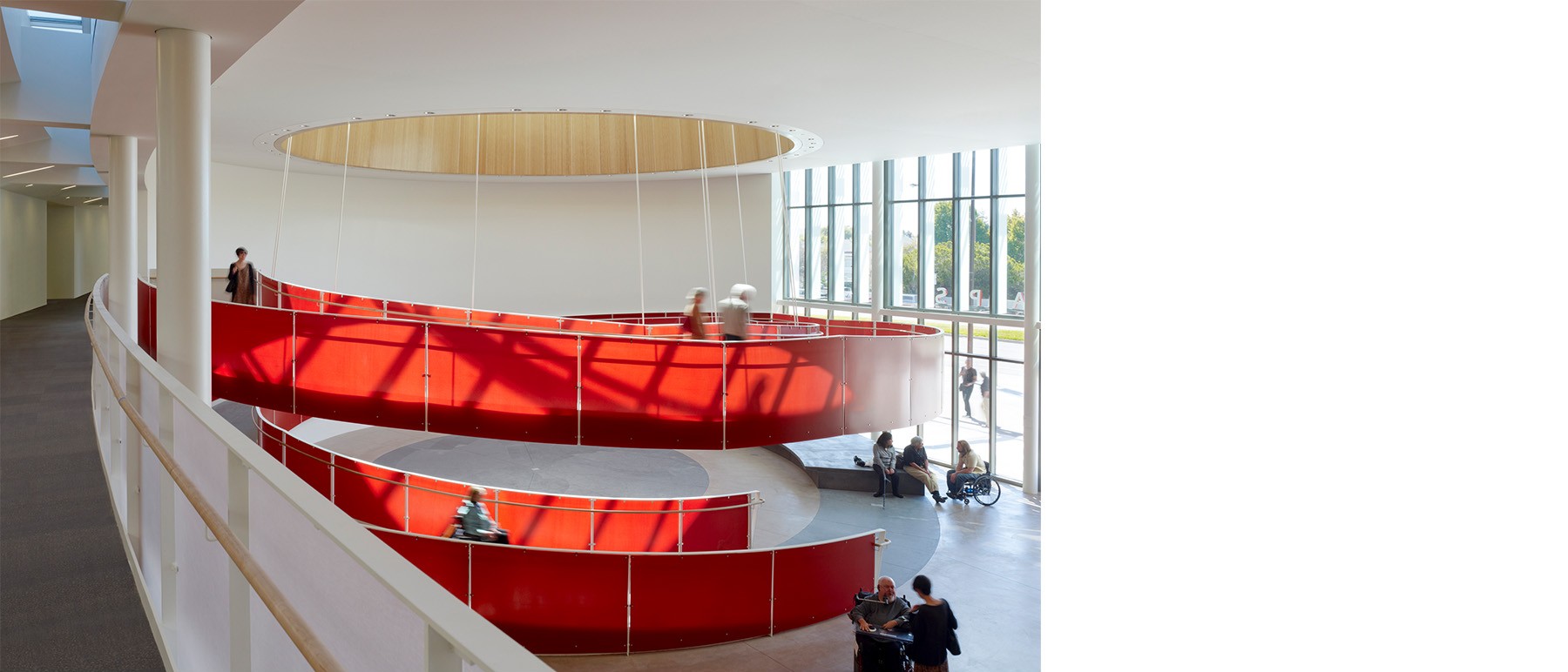
In the 2000s, when we designed the Ed Roberts Campus, a groundbreaking community center that celebrates the disabled rights movement, we learned how strategies for universal access are great for people at large. The wide ramp that connects the two floors was designed to accommodate people in wheelchairs but is also well loved by parents with strollers and occasional events, even weddings, where a processional entry provides a dramatic gravitas. There is so much intersectionality between what benefits one group and what benefits others. Architect Ron Mace, who coined the term “universal design,” described it as “design that is usable by all people, to the greatest extent possible.”
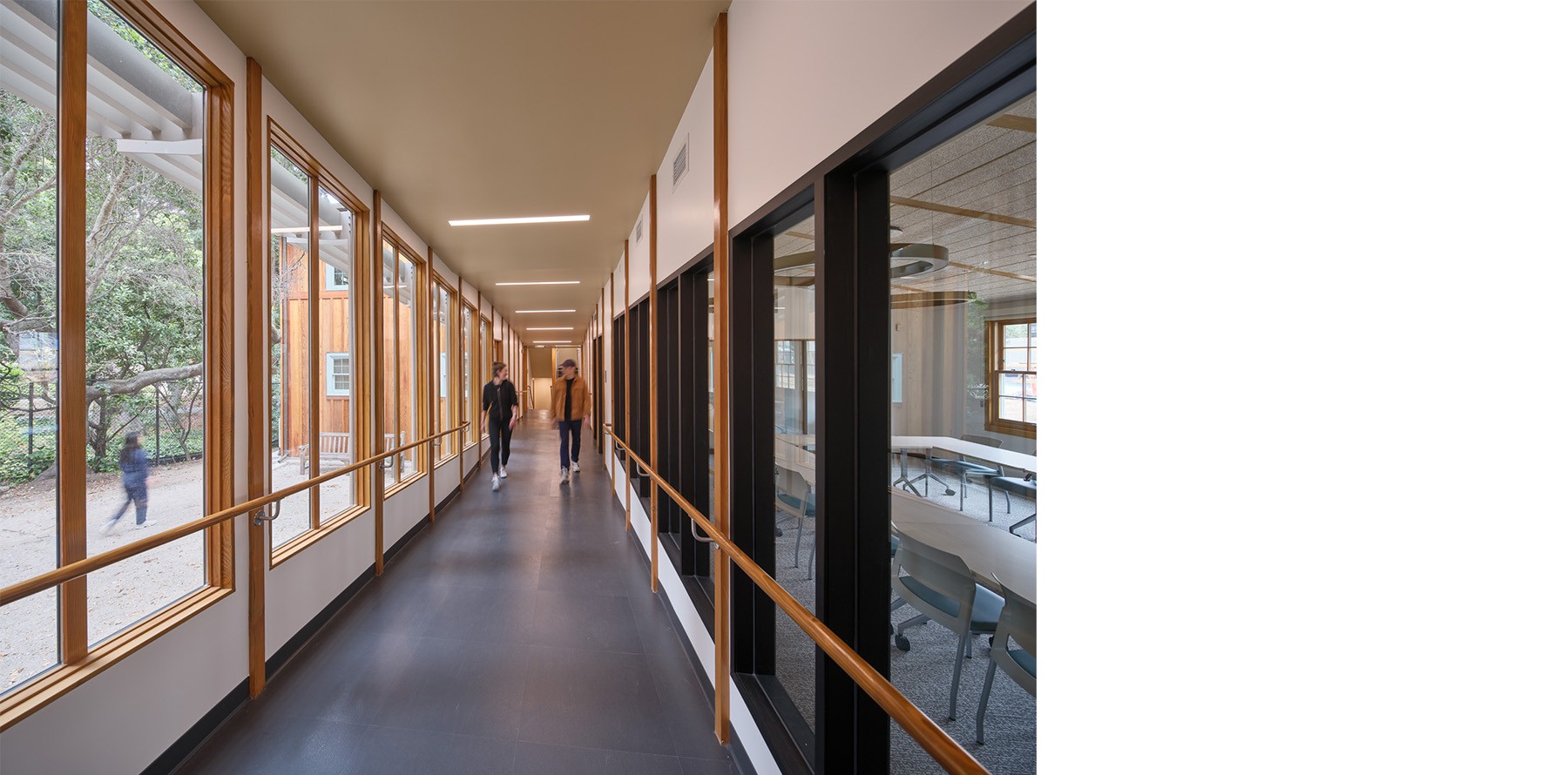
That project taught us to think in terms of providing an equitable spatial experience, where everyone navigates a building in the same way. 14 years later, at the UC Berkeley Creekside Center, a remodel of an existing building which houses the university’s Disabled Students’ Program (DSP), we replaced exterior stairs with a sloped main entrance, and similarly used a ramp to create a new connection between split levels on the second floor. However, this project displays a more layered approach to inclusive design beyond just the consideration of physical disabilities. The DSP reaches students with a diverse set of needs, from populations with chemical sensitivities to those with chronic health challenges. The design response provides clarity in circulation and wayfinding and explored ways for sensory stimuli to be abated, and opportunities to connect to nature – a needed respite in a bustling campus core. As an example, wood structural posts frame windows and are left exposed along both sides of the new ramp. Providing both visual and textural contrast, the natural wood assist with wayfinding by creating a rhythm unique to the main circulation spine without overwhelming the senses.
It’s important to underscore that design for inclusion accommodates more than just physical differences. We don’t have a checklist. Instead, with each project, we go through a deep engagement process, thinking about how to widen the circle of people that we talk to, and listening and engaging with as many people as possible.
Here are some ways we are expanding the circle:
Neurodiversity
We’ve reached a point where neurodiversity is recognized and celebrated. Being neurodiverse might mean that you have a formal diagnosis of autism, ADHD, or dyslexia, but there’s a general understanding that we all learn differently and process sensory input differently. Calm lighting, reducing electromagnetic field exposure, avoiding textiles that off-gas—these are design choices that are good for everyone.
When we worked on Sweetwater Spectrum Community, a landmark housing development for adults with autism, we learned how to design low-sensory environments and prominent wayfinding. We also internalized the concept of the threshold—a place where you can pause and evaluate an environment and decide whether you want to go in or not.
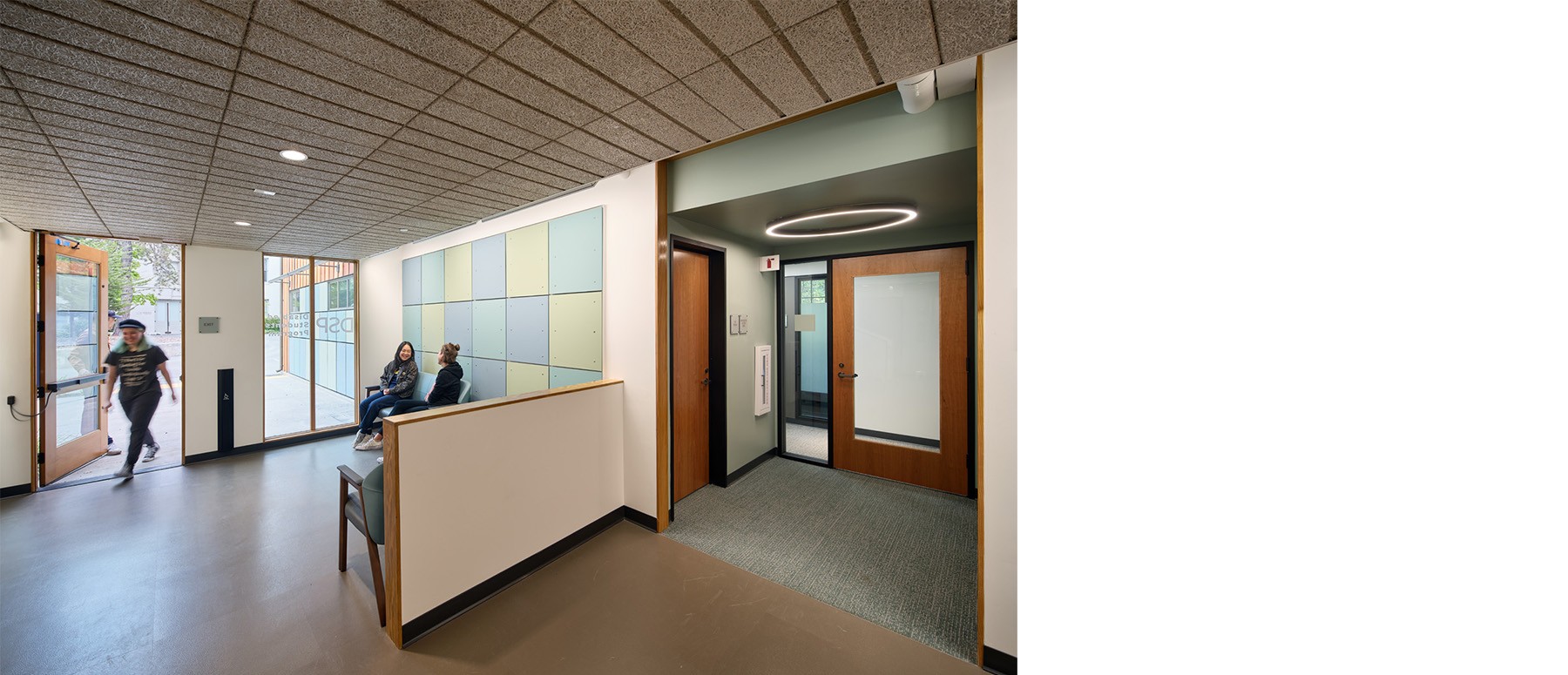
The threshold became an important part of our design for the UC Berkeley Creekside Center. The different departments in the building have thresholds, creating a brief transition space. Each threshold is highlighted by a different color of paint, and they have lower ceilings, carpeted flooring, and a ring lighting fixture to further distinguish them.
Gender Inclusivity
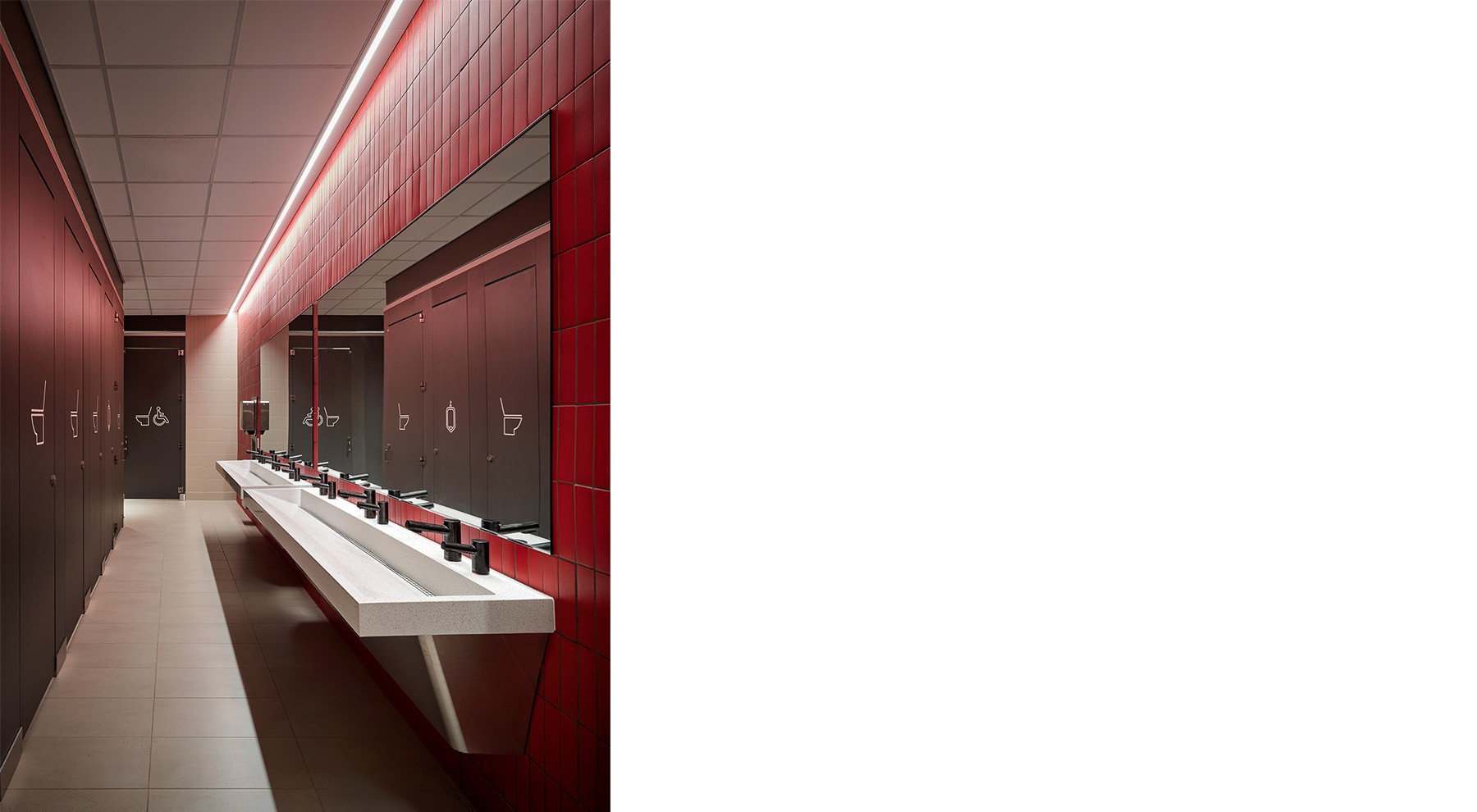
As organizations seek more inclusive and welcoming spaces, implementing gender-inclusive spaces, such as restrooms, are a given among our clients. At University High School, the leadership and staff wanted to provide a safe and inclusive environment for their students and community. Existing restrooms provided tampons, pads, and condoms, but remained gendered. With the new California Street Campus, LMSA and UHS explored how to bring all-gender restrooms to the school. Across three levels, the building has multi-stall gendered and all-gender restrooms and single-occupancy all-gender restrooms. With individual full-height partitions offering security and privacy, shared sink facilities with held open doors at each end offer transparency - both visually and acoustically.
Recently, we were asked to explore what a more inclusive locker room could look like. The common approach is to have a small area that is gender-inclusive, and a big area that is for traditionally gendered people. But what if the design was flipped, so it had a small area that is gender-specific and a large family area that is for everyone? There would still be private shower stalls and individual lockers, but the main area would be open to all. So the new space would include gendered shower stalls, and a large gender-inclusive communal area for everyone.
While gender-inclusive restrooms are becoming more commonplace in our region, it’s important to take into account that people from different cultures may not be comfortable with a communal setup, so some spaces may need gender-specific areas. We engage with our clients on this to understand the spectrum of comfort and privacy and put emphasis on the ability to provide choices.
When it comes to considering holistic inclusive design for gender identity and expression, we acknowledge that gender-inclusive restrooms and locker rooms are just the beginning; there is a great deal of emerging research on decentering binary ideas of gender in space. We are continuing to explore what it means to create welcoming, non-hierarchical, inclusive spaces for everyone.
Cultural Belonging
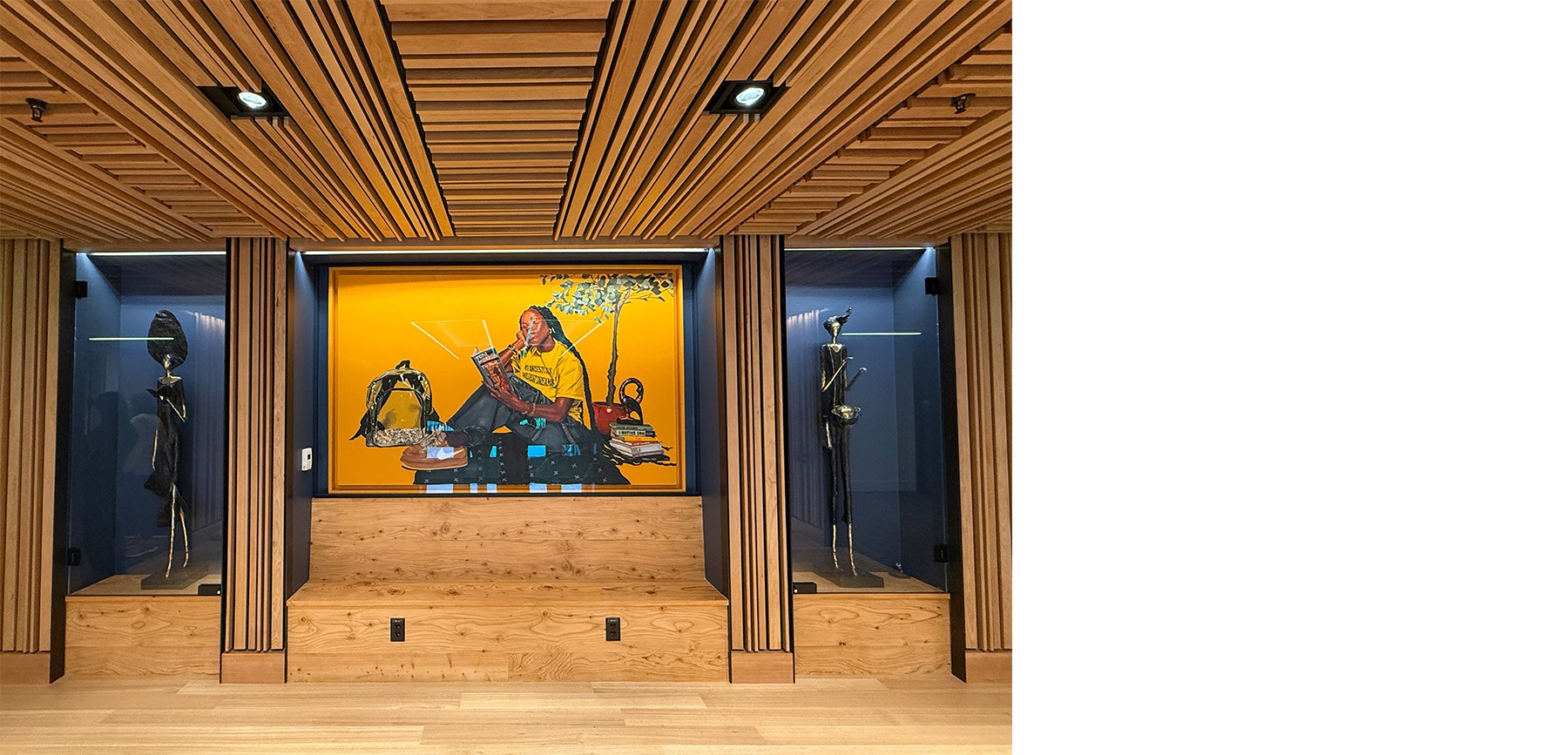
In some of our projects, creating cultural inclusion is an explicit part of the program. For example, we recently completed the Martin Luther King Institute and the Department of African and African American Studies at Stanford University. In both cases, the client wanted the spaces to be welcoming to everyone while maintaining and celebrating their cultural roots. For the Department of African and African American Studies, we incorporated weaving motifs in the hall’s wood ceiling panels, as well as in the ceramic tile patterns throughout the building, and embellished its glass privacy films with African icons. The furnishings are upholstered with colorful fabrics by Black designers. And the department’s impressive collection of African and African diaspora art, from paintings and sculpture to drums and maracas, is on display.
We also look for ways to reference cultural heritage in a way that is also universal, subscribing to the philosophy that awe transcends culture. The Department of African and African American Studies has big auditorium-style bleachers that allow students and researchers to lecture, engage with small groups, and create space for individual work. For the Chinese American International School, we were inspired by the traditional Chinese courtyard house. The courtyard is the central gathering place for the school and is a space that feels protected and nurturing.
When we are seeking information about the culture of a place through community engagement, we try to identify the other historical narratives that exist alongside the official history. For example, Mosswood Park is known as the oldest park in Oakland and features the property’s historic estate. But there are long-running community events and festivals which are also a key part of the story of the place. We collected those stories and made sure to include space for these historic programs when we designed a new community center there.
Trauma-Informed Design
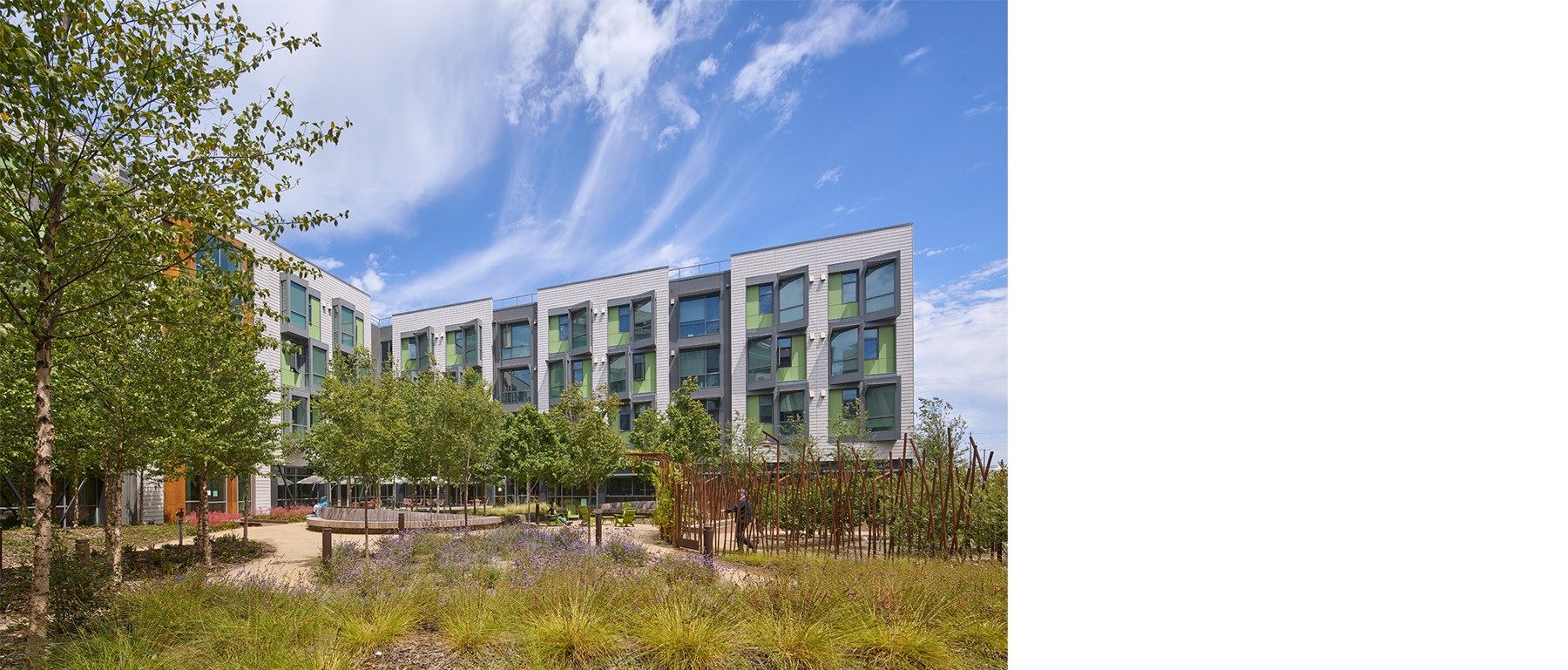
Through our many supportive housing projects, we have developed strategies for creating places that feel like home, and that feel safe. We focus on making these communities feel less institutional and providing privacy. At HomeRise at Mission Bay, there is a big community garden out front, creating a healing connection to nature within an urban environment.
To encourage residents to utilize supportive services, we designed the ground level with a “main street” with services located right off this central circulation corridor. At the same time, we’re conscious that people may not want to have their conversations with support staff in full view of everyone. The design provides translucent glass to those offices and provide multiple paths to access them so that there’s not just one way to access those services.
We have been fortunate to collaborate with a number of developers, institutions, and individuals that have shared our priority of designing inclusive spaces and pushing beyond minimum code and standard expectations. One collaborator we’ve had the opportunity to work with on multiple projects, Ben Perez, is the Sr. Program Manager, ADA, at University of California at San Francisco. In his words, “I think we need to reframe our understanding of the built environment and of our efforts towards design as an intention of unlocking human potential, regardless of the level of functional limitations that any individual has. We want integration.” We aim to uphold this spirit in our designs as it relates to inclusivity in the broadest sense.